
Guide to PMR
What is the PMR diet?
Raw feeding that mirrors what your dog would eat in the wild: meat, bone and organs. No kibble, no vegetables, no fillers.
Size your dog's box →PMR: Prey Model Raw
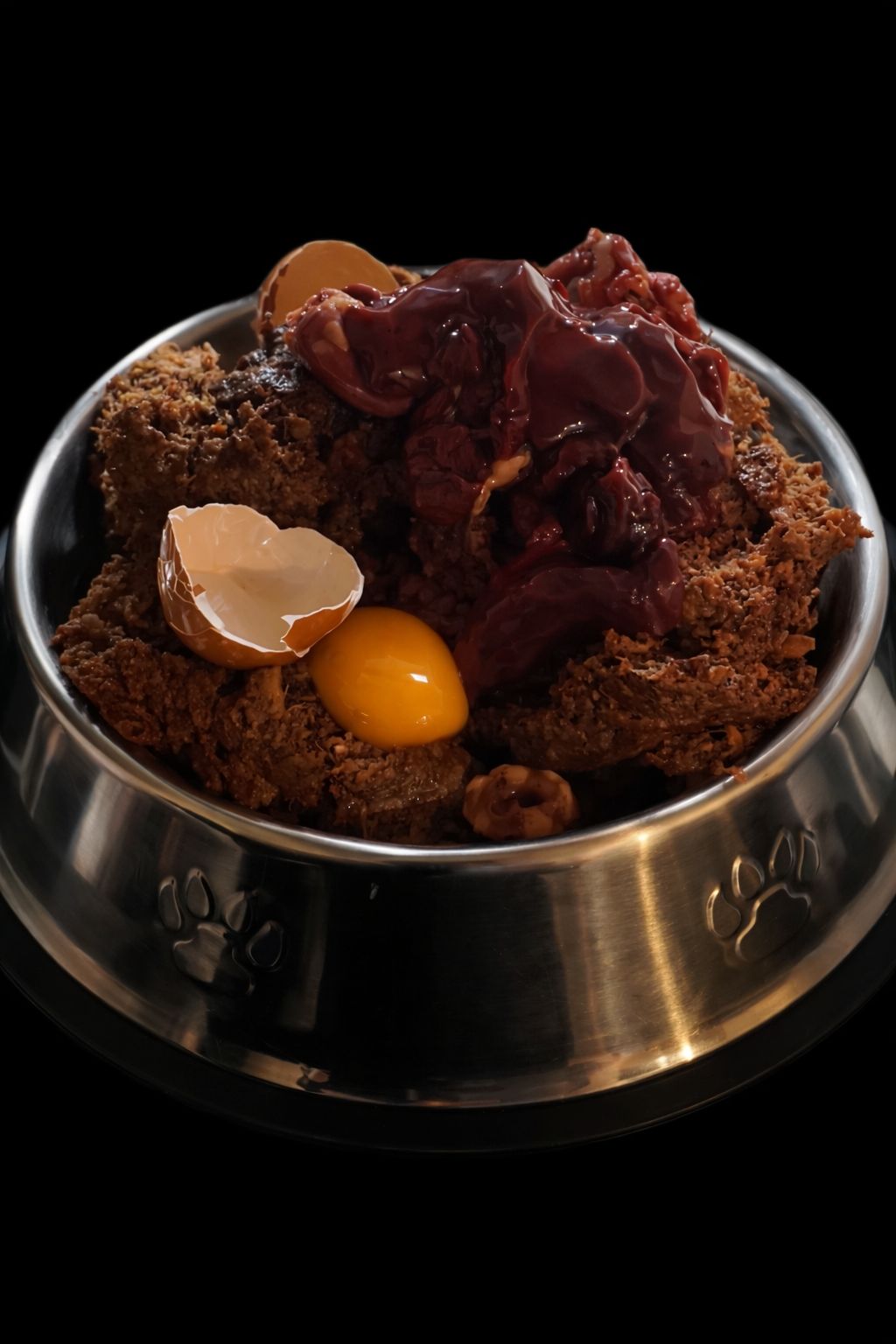
PMR (Prey Model Raw) is a raw feeding model that mirrors a predator's natural diet: muscle meat, meaty bone and organs, in the proportions of whole prey. No vegetables, no fruit and no grains.
Dogs are facultative carnivores: they can eat other things, but their short, highly acidic digestive system is built for animal protein and fat. PMR starts from that biology.
The formula
Every PMR diet follows the proportions of whole prey. This is our recipe:
Muscle meat
Thigh, with its natural fat.
Meaty bone
Carcass and neck, ground. Provides calcium and phosphorus.
Liver
The main source of vitamin A, B12, iron and copper.
Heart
Rich in taurine and essential amino acids.
Other organs
Kidney or spleen.
PMR vs BARF: what's the difference?
Both are raw feeding. The difference is what gets added to the meat.
| PMR | BARF | |
|---|---|---|
| Muscle meat | 70% | 60–70% |
| Meaty bone | 10–15% | 10–15% |
| Organs | 15–20% | 10% |
| Vegetables and fruit | No | 10–20% |
| Grains | No | No |
Both work for many dogs. We chose PMR because:
What they need
Dogs have no nutritional requirement for vegetables or grains. Meat, bone and organs cover the essentials.
Fewer variables
Fewer ingredients make it easier to see what suits your dog.
More animal protein
Every portion is meat, bone and organs. Nothing takes their place.
How much does a dog eat on PMR?
Small dogs eat around 3–4% of their body weight a day, large dogs around 2%. A 25 kg dog eats about 530–700 g a day; a 40 kg dog about 750–1,000 g, depending on age and activity. Our calculator uses the energy method from the FEDIAF guidelines, and we fine-tune the portion with you in the first weeks.
Is it safe?
Raw meat needs the same hygiene as the meat you cook at home. This is how we handle it, and how we recommend you do:
- Every order is made to order and frozen at −18 °C.
- Thaw it in the fridge for 12 to 24 hours and use it within 48 hours. Don't refreeze it.
- Wash your hands, bowls and surfaces after serving.
- If your dog is a puppy or unwell, or someone at home has a weak immune system, check with your vet first.
How to start
If your dog eats kibble, make the switch over about 7 days, gradually replacing their usual food. You can mix them in the same bowl.
Days 1–2
A quarter raw, mixed into their usual food.
Days 3–4
Half and half.
Days 5–6
Three quarters raw.
Day 7
Fully raw. If their stools get soft, stay at the previous step for two more days.
One protein at a time
Start with chicken for about two weeks. Once their stools are normal and steady, add one new protein a week and watch their stools, skin and digestion.

Give them what their nature asks for.
Tell us about your dog and we'll show you their box and price straight away.
Size your dog's box →